
What is play-based learning?
Play-based learning is an approach to early education where children build knowledge, skills and self-confidence through play, rather than formal, desk-based lessons.
It gives children the freedom to explore, imagine, experiment and interact with others in ways that feel natural and meaningful to them. This may include hands-on activities, pretend play, problem-solving, building, creating, storytelling, or simply following their curiosity.
While this play is often child-led, educators play an important role in supporting and extending the learning. We observe what children are interested in, ask thoughtful questions, introduce new ideas or resources, and gently guide experiences when it helps deepen understanding.
When children are engaged, comfortable and actively involved, learning becomes more meaningful. Through play, they begin to make sense of the world around them, build relationships, test ideas and develop the skills they will carry with them well beyond the early years.
8 play-based learning advantages in early childhood
The benefits of play-based learning are well supported by decades of research. This child-led, teacher-guided play has been shown to improve learning for all children compared to free play and direct instruction.¹
Even better, these positive effects are evident across learning areas like literacy, mathematics, and spatial skills.²,³,⁴
Let’s take a closer look at each advantage for early childhood development.
Nurtures cognitive development and problem-solving skills
Play gives children the space to think, question, and test. As they build, sort, imagine and experiment, they are developing key cognitive skills such as memory, concentration, reasoning and problem-solving.
A child working out how to stop a block tower from falling is learning about balance, structure and cause and effect. A child completing a puzzle is strengthening spatial awareness and persistence. A child sorting shells, leaves or buttons is beginning to recognise patterns, categories and differences.
These everyday moments may look simple, but they help children make sense of how things work. They learn to try an idea, notice what happens, adapt the approach and try again. This builds critical thinking and flexibility, helping children become more confident at solving problems on their own.
Enhances emotional intelligence
Play helps little learners understand their emotions and learn how to respond to other children’s feelings. In a safe and nurturing environment, children can explore big feelings, practise emotional regulation and develop empathy through everyday experiences.
For instance, a child caring for a doll may be learning how to show gentleness and compassion. On the other hand, a child feeling frustrated when a game doesn’t go their way is learning how to pause, communicate and try again.
With mindful guidance from educators, these moments become valuable opportunities for emotional development. Children learn to name their feelings, ask for help, manage disappointment and understand that others may feel differently from them.
Develops social skills
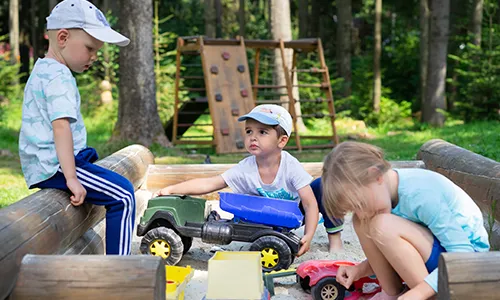
Play-based learning gives children daily opportunities to connect with others, build friendships and learn how to be part of a group.
When children play together, they practise sharing, taking turns, listening, negotiating and cooperating. They learn that their ideas matter, while also discovering how to consider the ideas and needs of others.
For example, a group of children creating a pretend animal shelter may decide who will welcome the pets, who will feed them and who will build their beds.
Along the way, they are learning how to communicate, solve disagreements, make joint decisions and work towards a shared goal. These skills help children feel a sense of belonging and form positive relationships with others.
Throughout the day, educators model kind language, help children join in, guide conflict resolution, and encourage fairness.
Improves language and communication skills
Play creates rich opportunities for children to use language in meaningful ways. Through conversation, storytelling, singing, role-play and group activities, children learn to express their ideas, listen to others and build their vocabulary.
During imaginative play, children often take on different characters, explain what is happening and create their own storylines. A pretend airport, for example, may introduce words such as “ticket”, “map”, “destination” and “passport”.
These playful interactions support early literacy by helping children understand how words, sounds, symbols and stories work together.
They also help children practise the listening and speaking skills they need for learning, friendships and everyday routines.
In turn, children grow into confident communicators who feel heard and understood.
Sparks imagination and creative thinking
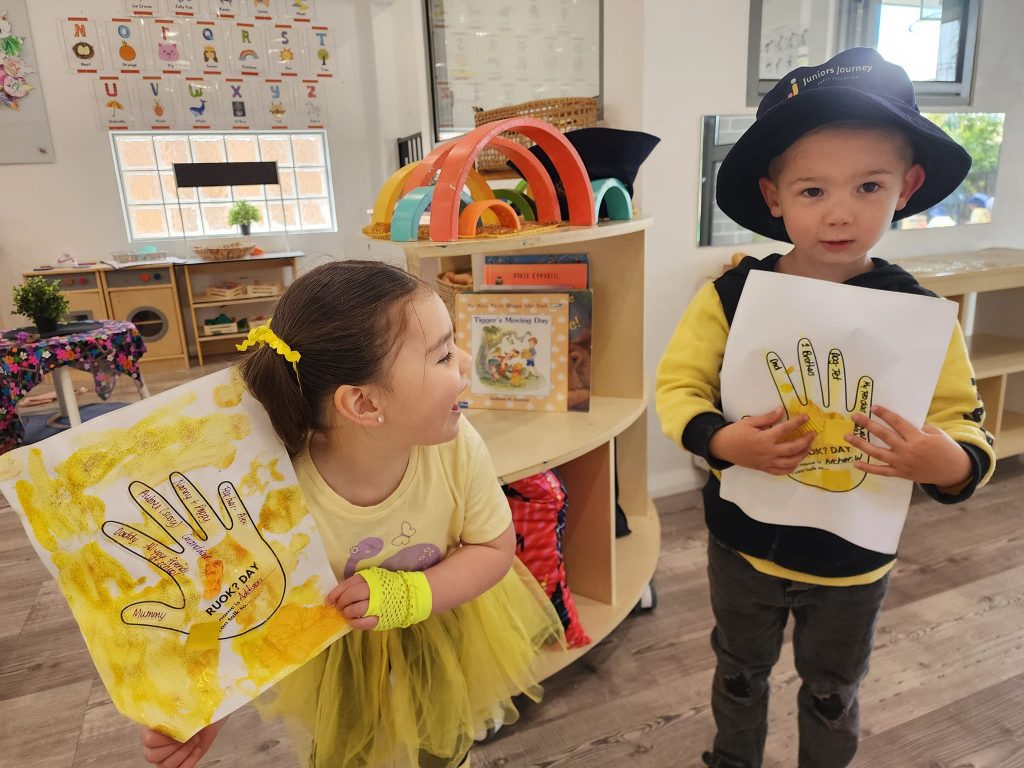
Play gives children the freedom to imagine new worlds, create their own stories and explore ideas without needing a single right answer.
A cardboard tube can become a telescope, a cushion can become a mountain, and a few pieces of fabric can become a costume, a cubby or a sailing boat.
Through this kind of open-ended play, children learn to think creatively, adapt their ideas and see possibilities in the world around them.
Creative play also supports problem-solving. When children build, invent or act out a story, they often need to make decisions, change direction and work through challenges. This helps them become flexible thinkers who are comfortable experimenting and trying new approaches.
Just as importantly, imaginative play allows children to explore who they are, what they know and how they see the world, all within a safe and supportive space.
Inspires curiosity and discovery

Play-based learning invites children to wonder, investigate and learn through hands-on discovery. It invites them to ask questions, make predictions and explore what happens next.
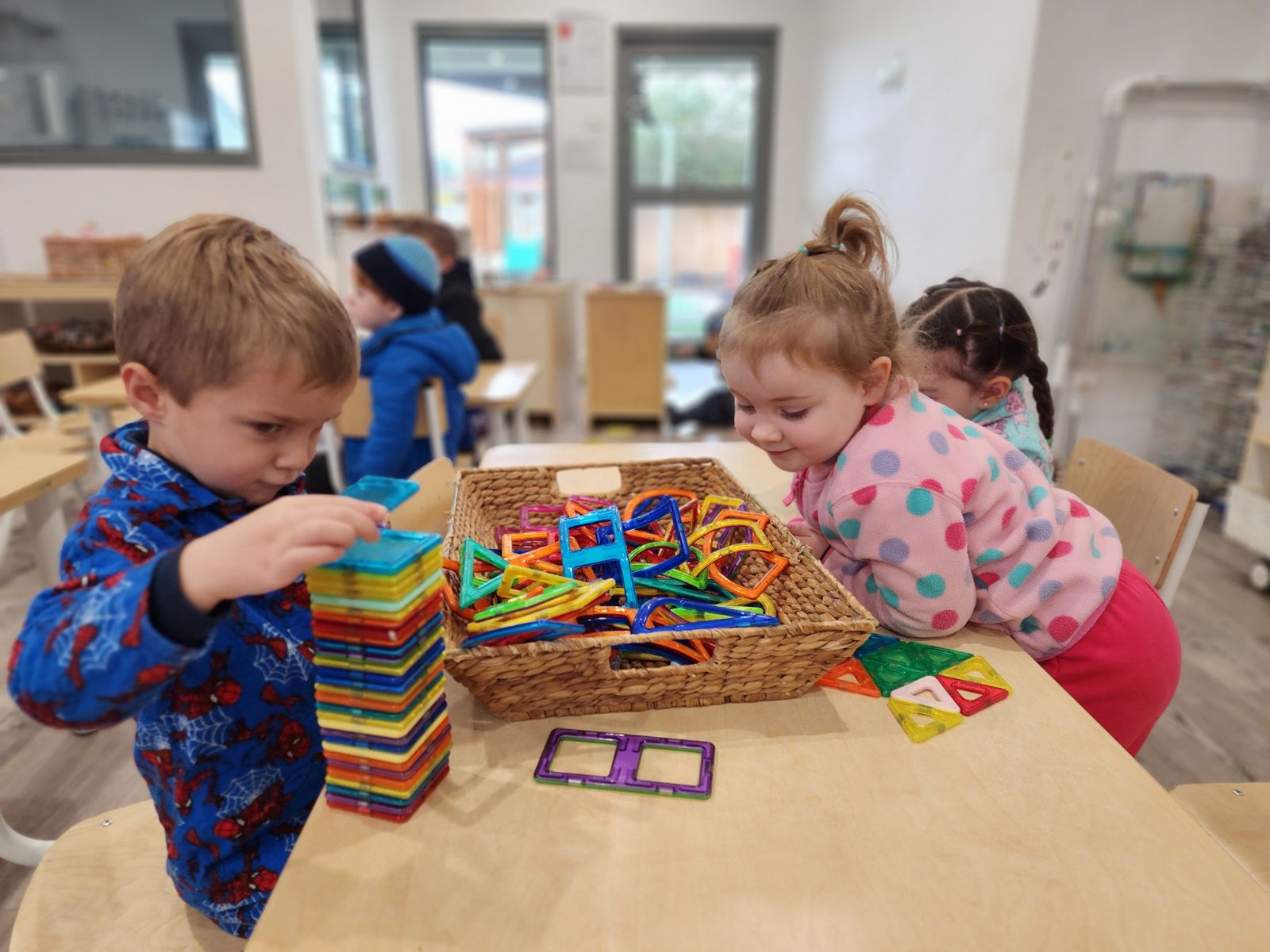
Children may notice how water changes the texture of sand, wonder why some objects float, compare the shapes of leaves or watch what happens when light shines through coloured blocks.
These experiences introduce early science, maths, language and critical thinking in ways that feel exciting and real.
Curiosity grows when children have time to explore. Rather than rushing to an answer, they can observe, test, repeat and draw their own conclusions. This helps them become active learners who are interested in how the world works.
Educators support this by asking open-ended questions such as, “What do you notice?”, “How could we find out?” or “What might happen if we try it another way?”
These gentle prompts encourage deeper thinking while keeping the joy of discovery at the centre of early childhood education.
Builds motor skills for physical development
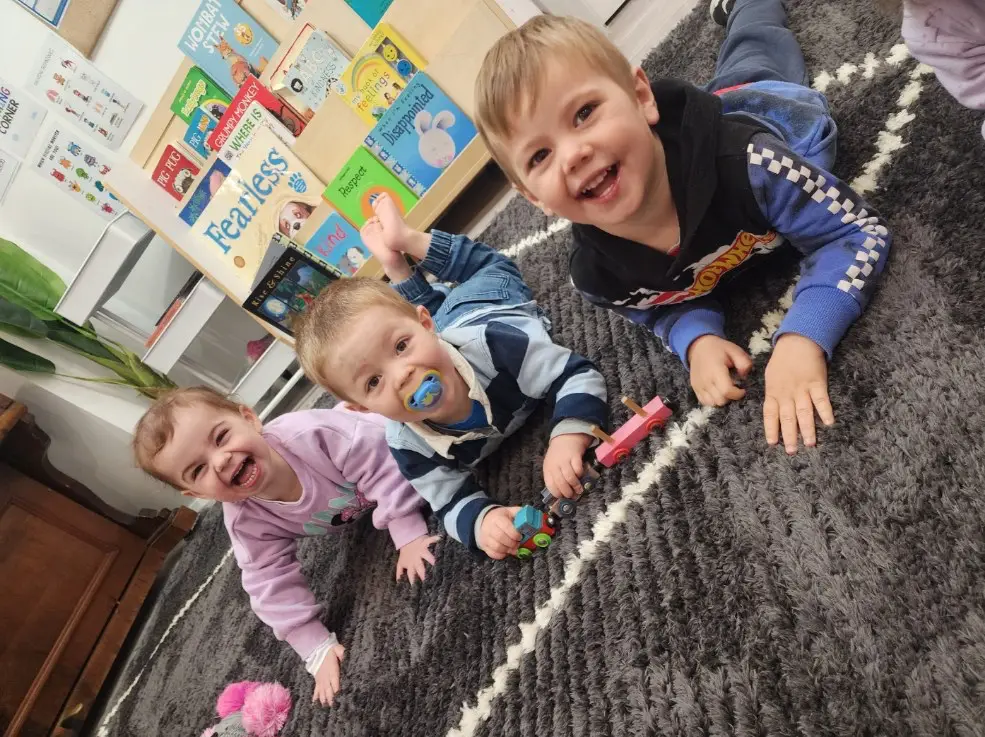
Physical play helps children understand what their bodies can do, improve coordination and build confidence in movement. Active play is also valuable because it gives children space to take safe, supported risks.
Large movements such as climbing, running, jumping, balancing, dancing and throwing help develop gross motor skills. These essential skills support strength, balance, coordination and body awareness.
Smaller movements also matter. Drawing, painting, threading, cutting, building with small blocks, or moulding playdough all strengthen fine motor skills, which are important for everyday tasks like dressing, eating, writing and using tools.
Strengthens engagement and confidence
Children are more engaged when learning feels meaningful to them. Play-based learning follows children’s interests, giving them the freedom to make choices, explore ideas and learn at their own pace.
When children are deeply involved in purposeful play, they are more likely to concentrate, persist and take pride in what they are doing.
They might spend time perfecting a drawing, rebuilding a cubby, creating a pretend menu or working out how to move water from one container to another.
Each small win helps build confidence for future success.
Playful learning also permits children to make mistakes. There is less pressure to get the “right” answer and more focus on trying, discovering and improving.
This helps children develop independence, resilience and a positive attitude towards learning.
Why play-based learning activities are so effective
Research shows that powerful learning experiences are active, engaging, meaningful, socially interactive and iterative.⁵ Play-based learning environments naturally tie these elements together.
A child building a tower, caring for a doll, mixing colours, creating a pretend shop or exploring sand and water is using their mind, body, language and social skills all at once.
Because play feels meaningful and enjoyable, children are more likely to stay engaged and take an active role in their own learning. Play supports joy, creativity and motivation, which are all closely linked to learning.⁶
This approach also allows educators to shape the experience so that a learning goal is within reach, without removing children’s independence or pushing them towards one fixed answer.⁷ The play still belongs to the child, but the learning becomes richer (more on this below).
Over time, these play-based activities help children connect new ideas with what they already know. They experiment, adapt, communicate and persist, laying strong building blocks for future learning in a natural, enjoyable and age-appropriate way.
How educators support the benefits of play-based learning
Educators make play-based learning more intentional by turning everyday moments into meaningful learning opportunities. While children are free to follow their interests, we are carefully watching, listening and responding in ways that help deepen their thinking.
Using our knowledge of child development, each child’s interests and the Early Years Learning Framework, we plan experiences that are engaging, age-appropriate and meaningful. Rather than interrupting play, we look for natural opportunities to build on what children are already exploring.
This might mean introducing new concepts, encouraging children to describe their ideas, or adding an element that takes the play further.
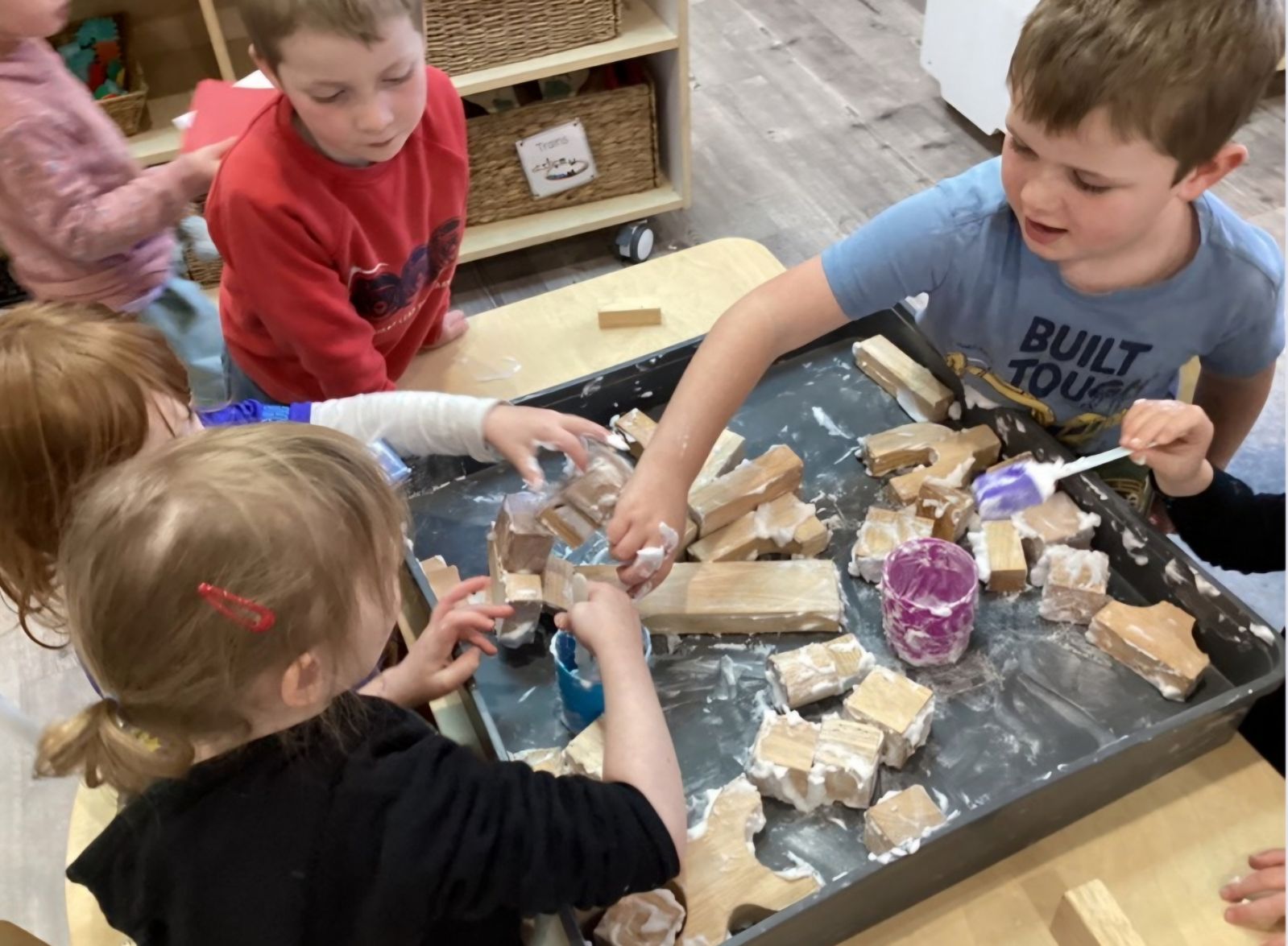
For example, children playing with blocks might begin by building a road. An educator could add signs, vehicles or a map, encouraging children to explore direction, symbols, storytelling, cooperation and early problem-solving.
Importantly, guided play can reduce confusion while still giving children room to learn. Instead of telling children exactly what to do, we help point them towards possibilities, so they can make discoveries for themselves.⁸
Educators also create calm, inclusive learning environments where children feel confident to try, test, wonder and make mistakes. This sense of safety is important because children are more likely to take part, share thoughts and build independence when they feel supported.
Ultimately, by combining child-led discovery with thoughtful guidance, we support children in building the foundational skills for lifelong learning.
Embrace play-based learning with Juniors Journey
Play-based learning gives children the freedom to explore, create, problem-solve and build confidence in ways that feel natural to them. From pretend play to outdoor adventures, each engaging experience empowers children to thrive.
At Juniors Journey, our early childhood educators create safe, supportive and stimulating environments where play enhances every area of your child’s development.
Guided by the Early Years Learning Framework, we take pride in teaching young children to become confident, curious and capable learners.
Our early learning centres in Gateshead, Mildura, and Eglinton welcome children aged six weeks to six years old. Book a tour, enrol your child or get in touch with our friendly team to find out more.
Sources
- Alfieri, L., P.J. Brooks, N.J. Aldrich, & H.R. Tenenbaum. 2011. “Does Discovery-Based Instruction Enhance Learning?” Journal of Educational Psychology 103 (1): 1–18.
- Moedt, K., & R.M. Holmes. 2020. “The Effects of Purposeful Play After Shared Storybook Readings on Kindergarten Children’s Reading Comprehension, Creativity, and Language Skills and Abilities.” Early Child Development and Care 190 (6): 839–54.
- Zosh, J.M., B. Hassinger-Das, T.S. Toub, K. Hirsh-Pasek, & R. Golinkoff. 2016. “Playing with Mathematics: How Play Supports Learning and the Common Core State Standards.” Journal of Mathematics Education at Teachers College 7 (1): 45–49. https://doi.org/10.7916/jmetc.v7i1.787.
- Fisher, K.R., K. Hirsh-Pasek, N. Newcombe, & R.M. Golinkoff. 2013. “Taking Shape: Supporting Preschoolers’ Acquisition of Geometric Knowledge Through Guided Play.” Child Development 84 (6): 1872–78.
- Zosh, J.M., K. Hirsh-Pasek, E.J. Hopkins, H. Jensen, C. Liu, D. Neale, S.L. Solis, & D. Whitebread. 2018. “Accessing the Inaccessible: Redefining Play as a Spectrum.” Frontiers in Psychology 9: 1–12. https://doi.org/10.3389/fpsyg.2018.01124.
- Resnick, M. 2007. “All I Really Need to Know (About Creative Thinking) I Learned (by Studying How Children Learn) in Kindergarten.” In Proceedings of the 6th ACM SIGCHI Conference on Creativity & Cognition, 1–6. New York: Association for Computing Machinery.
- Weisberg, D.S., K. Hirsh-Pasek, R.M. Golinkoff, & B.D. McCandliss. 2014. “Mise en place: Setting the Stage for Thought and Action.” Trends in Cognitive Science 18 (6): 276–78.
- Bonawitz, E.B., P. Shafto, H. Gweon, N.D. Goodman, E.S. Spelke, & L. Schulz. 2011. “The Double-Edged Sword of Pedagogy: Instruction Limits Spontaneous Exploration and Discovery.” Cognition 120 (3): 322–30.