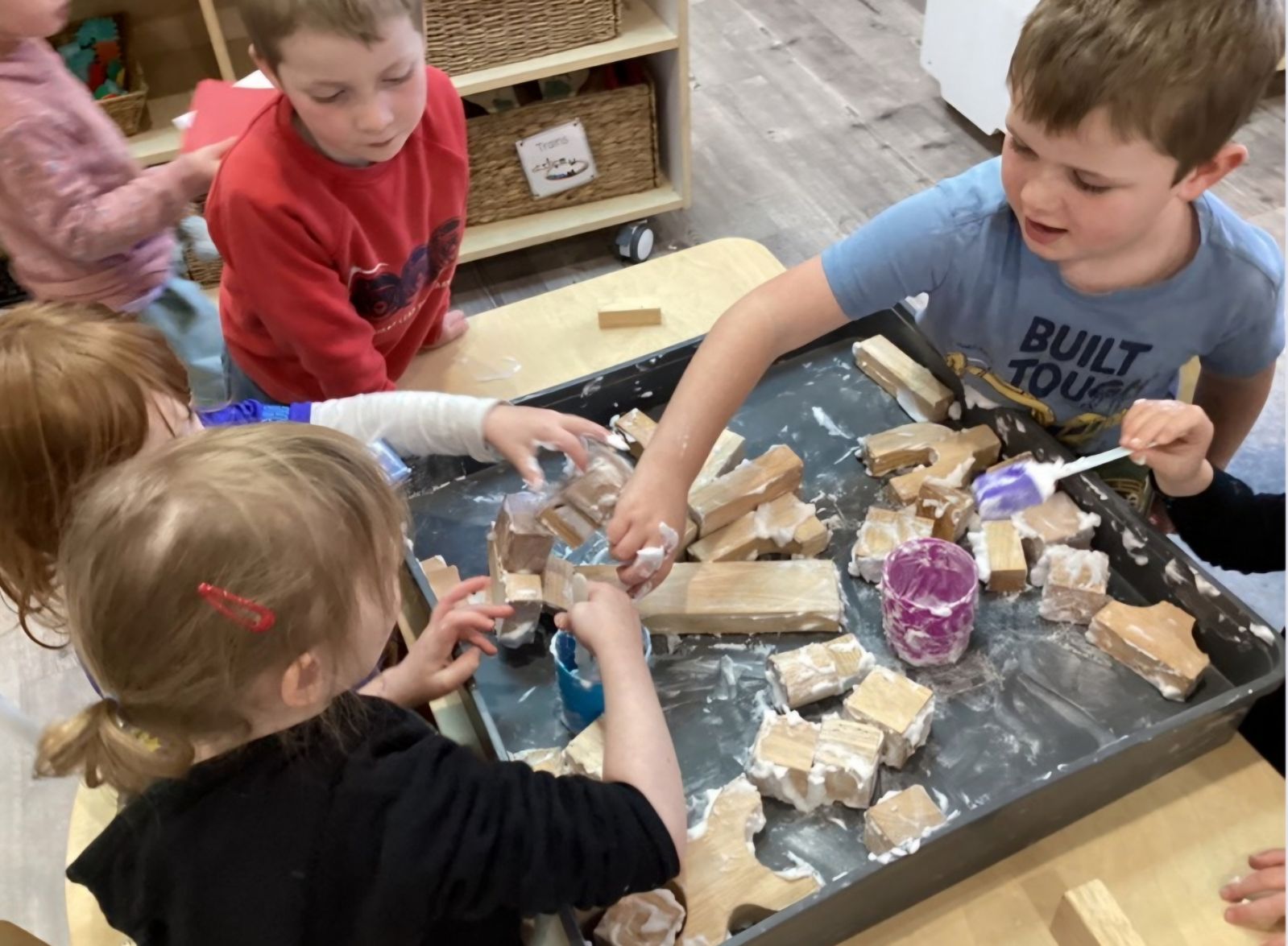


This child-centric approach is at the core of the Early Years Learning Framework (EYLF), an evidence-based program that guides high-quality early childhood education across the country.
At Juniors Journey, our early childhood educators help little ones to embrace play-based learning every day. In this guide, we’ll explain what this theory looks like in practice, how it aligns with the EYLF, and why it’s so important.
What is play-based learning in early childhood education?
Play-based learning is an evidence-based approach to early childhood education that uses play as the primary way children make sense of the world. It recognises that meaningful development happens naturally when children are actively engaged, curious, and enjoying what they’re doing.
Through play, children explore ideas, experiment, take safe risks, solve problems, and use their imagination. These hands-on experiences nurture all areas of development, including physical skills, literacy and numeracy, critical thinking, social interaction, and emotional well-being.
Importantly, play-based learning is both child-initiated and teacher-supported. Children lead their play based on their own interests, while educators carefully observe, ask purposeful questions, and introduce new ideas or materials. This guidance helps deepen understanding without taking control away from the child.
This holistic approach aligns with each child’s developmental stage, allowing them to learn at their own pace. It creates a supportive, engaging environment where children build confidence, independence, and solid foundations for future success.
Core characteristics of play-based learning
- Unstructured: Play is not bound by rigid rules or set outcomes. Children are free to explore, experiment, and discover at different rates, following their interests and ideas as they emerge.
- Self-led: Children choose how, what, and how long they play. Educators remain present to supervise, support, and gently guide when needed, but the learning direction remains in the child’s hands.
- Process-driven: The value lies in the experience itself rather than the result. Children learn through action, experimenting, problem-solving, and adapting to build competence and confidence.
- Fun and active: Play-based learning is engaging, enjoyable, and positive. Children feel connected to what they are doing because the experience is motivating, relevant, and never forced.
- Imaginative: Children are encouraged to use their imagination freely, such as through pretend play or storytelling. This creative freedom supports language development, emotional expression, and flexible thinking.
Play and the Early Years Learning Framework
Play-based learning theory sits at the heart of the Early Years Learning Framework (EYLF), Australia’s national framework guiding how children from birth to five develop key capabilities and discover the world.
Grounded in the principles of belonging, being, and becoming, this framework ensures learning experiences respect each child’s individuality, culture, and stage of development.
The EYLF highlights play as essential to supporting children’s holistic development, helping them grow socially, emotionally, physically, and cognitively through meaningful, engaging experiences.
Within the EYLF, play-based learning allows educators to build on children’s interests and strengths while intentionally supporting core skills such as communication, problem-solving, resilience, and independence.
Educators create environments where children feel safe, valued, and confident to explore, while using observation and gentle guidance to extend learning in age-appropriate ways.
For families, the EYLF provides reassurance that everyday play has purpose. It shows how play, relationships, and thoughtful teaching work together to support real learning outcomes.
Parents can feel confident knowing their child is learning in a nurturing environment that celebrates curiosity, supports wellbeing, and lays strong foundations for school and lifelong learning.
How does play-based learning differ from free play?
Play-based learning and free play both play a valuable role in early childhood development, and each supports children in different ways.
Free play gives children complete freedom to choose their activities, play independently or with others, and explore their interests purely for enjoyment. It supports creativity, independence, and social connection, allowing children to relax and express themselves naturally.
Play-based learning builds on these same strengths, with learning intentionally woven into play experiences to achieve educational goals.
Children still lead their play, but educators thoughtfully plan the environment and use gentle guidance to support skills such as communication, early literacy, numeracy, problem-solving, and emotional development. Teachers observe children’s interests and extend their thinking through meaningful interactions rather than direct instruction.
Examples of play-based learning
Play-based learning can take many forms, all designed to support children’s development through active, meaningful experiences.
Common examples include:
- Pretend play: Encourages creativity, adaptability, and social understanding. Through imaginary play and storytelling, children explore different roles, practise empathy, express emotions, and build language skills by using new words and ideas in context.
- Object play: Involves exploring everyday objects, blocks, toys, and loose parts. Children investigate how items fit together, move, stack, or change shape, supporting problem-solving, imagination, and physical coordination.
- Physical games: Cover activities such as running, climbing, jumping, and navigating obstacles. This play builds physical fitness and motor skills, as well as supporting social interaction and self-confidence.
- Arts and crafts: Allows children to express thoughts and feelings through drawing, painting, sculpting, and collage. Art play strengthens fine motor skills, hand-eye coordination, and creative thinking while encouraging experimentation, decision-making, and non-verbal communication.
- Nature play: Encourages children to explore outdoor environments like gardens, beaches, and natural materials. Getting out in the fresh air and exploring nature supports overall well-being, independence, curiosity, and early scientific enquiry, while fostering respect for the planet.
- Music and dancing: Includes dancing, singing, and rhythmic movement. These activities foster balance, coordination, confidence, and emotional expression, while also strengthening language, memory, and early literacy through songs and repetition.
Together, these play experiences help children learn in ways that are engaging, developmentally appropriate, and aligned with the EYLF.
Benefits of play-based learning for a child’s development
Play supports every aspect of a child’s development by allowing them to learn in ways that feel natural, meaningful, and engaging.
Let’s take a closer look at the importance of play-based learning:
Cognitive development
Play-based learning strengthens children’s cognitive skills, such as critical thinking, reasoning, and problem-solving. Activities such as building with blocks, puzzles, or role play require children to plan, experiment, and adapt when things change.
These experiences can teach spatial awareness, basic mathematical concepts, memory and concentration skills, and early scientific thinking.
Language development is also strongly supported through play. During imaginative and social play, children naturally expand their vocabulary, practise conversation, and learn how language works in real situations. Storytelling, pretend roles, and shared dialogue help children connect speaking, listening, reading, and early writing in meaningful ways, supporting early literacy.
Social skills
Play is a powerful way for children to learn how to interact with others.1 Through shared play experiences, children practise cooperation, turn-taking, negotiation, and conflict resolution. They learn how to express their needs, listen to others, and work together toward a common goal.
Play-based learning also supports the development of empathy. By interacting with peers and taking on different roles during pretend play, children begin to understand other perspectives and emotions, helping them feel more confident, connected, and secure in their relationships.
Emotional regulation
Play provides children with a safe and supportive space to explore and express their emotions. Through imaginative scenarios and social interactions, children learn to recognise feelings, manage frustration, and develop coping strategies.
By navigating challenges during play, such as sharing materials or resolving disagreements, children build emotional resilience and self-awareness.
Creativity and imagination
Creativity is at the centre of play-based learning. Imaginative play encourages children to think flexibly, explore ideas, and solve problems in creative ways.
Whether inventing stories, role-playing, or building new worlds, children learn to adapt when things don’t go to plan and become more comfortable with independent thinking.
As children grow, their imaginative play becomes more complex, involving multiple roles, settings, and shared goals. This creative exploration supports cognitive development, emotional expression, and the ability to think beyond familiar solutions.
Fine and gross motor skills
Play-based learning supports physical development by strengthening both fine and gross motor skills. Active play such as running, climbing, jumping, and throwing builds strength, balance, coordination, and body awareness.
Meanwhile, hands-on activities like drawing, painting, moulding, stacking, and manipulating small objects help children develop fine motor control, hand-eye coordination, and dexterity.
Nurtures a lifelong love of learning
One of the greatest benefits of play-based learning is its ability to foster a positive attitude toward learning. When children choose activities based on their interests, they are more motivated, focused, and engaged.
In turn, play-based learning encourages independence, confidence, and persistence. Children learn to set goals, take appropriate risks, and work through challenges at their own pace.
This sense of achievement builds self-belief and curiosity, which are the building blocks for an enjoyable education experience.
Integrating play-based learning in childcare settings
When implemented properly, play becomes part of everyday learning rather than a separate activity. However, successfully embedding play in educational environments takes thoughtful planning, flexible spaces, and a strong understanding of how children learn best.
Here are some ways we incorporate play-based learning at our early learning centres:
Dedicated play areas
Our flexible, purpose-built play areas are designed to invite exploration, creativity, and collaboration. From reading corners to sensory play zones, each space supports a different type of learning and allows children to move freely between activities based on their interests.
Within each learning environment, flexible layouts and resources, such as natural materials, toys and art supplies, spark imagination, independence and deeper engagement.
As children interact with varied play settings, they can naturally develop early literacy, communication, creativity, and thinking skills.
Fun daily routines
We extend play-based learning beyond planned activities and into everyday routines. Our educators transform daily tasks into playful learning opportunities by incorporating movement, music, and imagination into transitions such as pack-up time, group gatherings, or outdoor play.
These playful routines help children stay interested and have fun while building language, coordination, and social skills.
Adaptations for different learners
Play-based learning is inclusive and adaptable. Our educators tailor activities, materials, and support to suit each child’s needs, interests, and abilities.
This may include offering a range of sensory experiences, adjusting environments, or providing gentle guidance and scaffolding to support participation.
By meeting children where they are, play-based learning ensures every child feels supported, confident, and capable of learning through play.
Discover play-based programs with Juniors Journey
Play-based learning is a powerful tool that inspires children to grow into confident, curious, and capable individuals. By exploring their surroundings through fun, engaging and teacher-facilitated experiences, children can build essential cognitive, social, emotional, and physical skills at their own pace.
At Juniors Journey, our qualified early childhood educators guide play-based activities to nurture every aspect of development in line with the EYLF.
If you’re based in Gateshead, Mildura, or Eglinton, our welcoming early learning centres provide a supportive and enriching start to your child’s education.
Book a tour, enrol your child today or get in touch with our friendly team to discover how play-based learning can support your child’s journey.
References
Lester, S. & Russell, S. (2008). Play for a change. Play policy and practice: A review of contemporary perspectives. Play England.